


Pyrolysis and Gasification Technologies for Plastic Waste: Technical and Economic Aspects
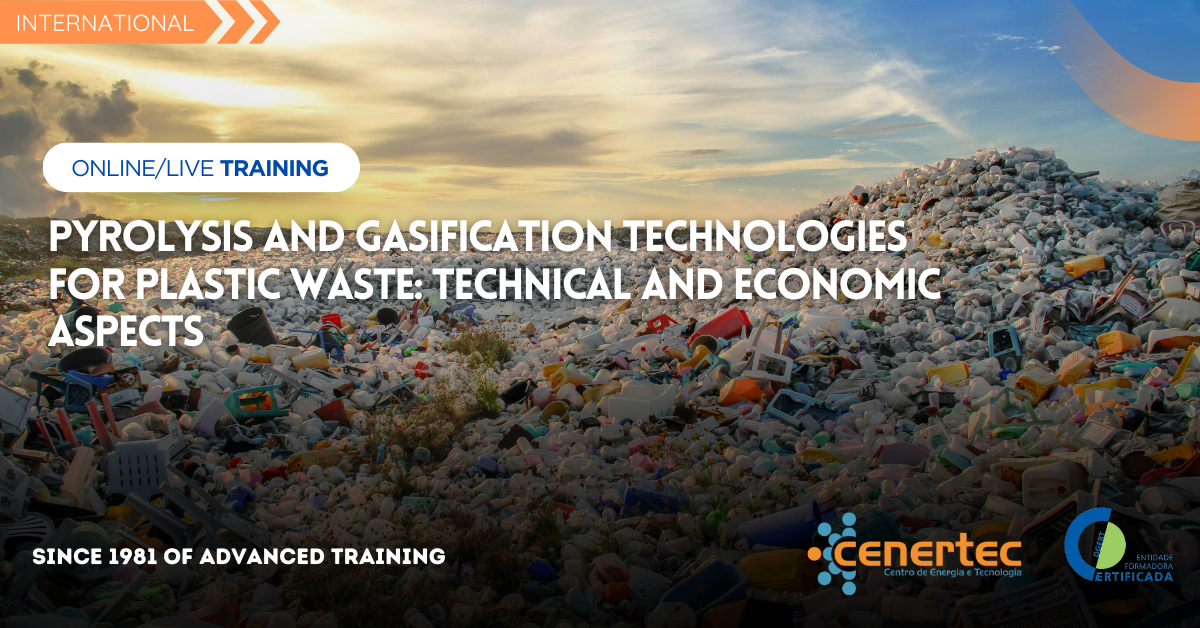
9th EditionPlastic waste has become a major environmental, industrial and economic challenge. With more than 12 million tonnes entering the oceans each year, a figure which is rising rapidly, the resulting damage to marine ecosystems is estimated at up to USD 2,500 billion annually — equivalent to over 3% of global GDP.
This has led to increased regulatory pressure worldwide, with industries and public authorities actively seeking scalable solutions for treating mixed and contaminated plastics.
In this context, pyrolysis and gasification technologies are emerging as key solutions for converting mixed or contaminated plastics into fuels, electricity, heat, hydrogen-rich syngas, and chemical feedstocks.
This advanced professional course provides a comprehensive and critical overview of state-of-the-art plastic pyrolysis and gasification systems from pilot plants to near-commercial deployments.
TOPOBy the end of the course, participants will be able to:
- Understand the physical and chemical principles of pyrolysis and gasification applied to plastics, including product distributions (gas, oil, char) and technological limitations.
- Compare medium- and high-temperature pyrolysis systems, evaluating their operational performance through mass and energy balances.
- Identify which plastic streams are suitable for which conversion pathways.
- Analyse process efficiencies, integration options and scale-up challenges.
- Define the key parameters that govern the economic feasibility of a project, including CAPEX, OPEX, revenues and risk factors.
The course combines expert lectures with practical engineering case studies. Key topics include:
- Plastic waste characteristics and impacts, including composition, additives, degradation behaviour, toxicity issues and impacts on ecosystems, food chains and human health.
- Comparison of recycling and energy-recovery routes, including mechanical recycling, incineration, gasification and hybrid schemes.
- Plastic pyrolysis technologies – batch, semi-continuous and continuous systems; medium-temperature (400–500 °C) and high-temperature (700–800 °C) processes; catalytic approaches.
- Gasification of plastics and mixed wastes – reactor concepts, syngas utilisation and process flexibility.
- Pilot and demonstration plants – performance data, operational feedback and lessons learned.
Hands-on Case Studies
Participants will work on real industrial examples, including:
- Mass and energy balance simulations using professional process-analysis Stan2web software.
- The economic feasibility of a demonstration plant using Retscreen Expert Clean Energy Management Software.
These sessions focus on decision-making in realistic project contexts, not just theory.
TOPO- Engineers and technical managers
- R&D specialists
- Project developers and EPC teams
- Consultants and technology evaluators
- Energy and waste-management professionals
- Economists and policy advisors
- University lecturers and trainers
- Anyone involved in plastic-waste valorisation projects
- A highly interactive format combining:
- Expert lectures with industrial examples and videos
- Q&A and open technical discussions
- Short exercises with guided solutions
- Live demonstrations of professional software tools
- Case-study-driven learning
Each participant will receive a 60-day license key to RETScreen Expert – Professional mode
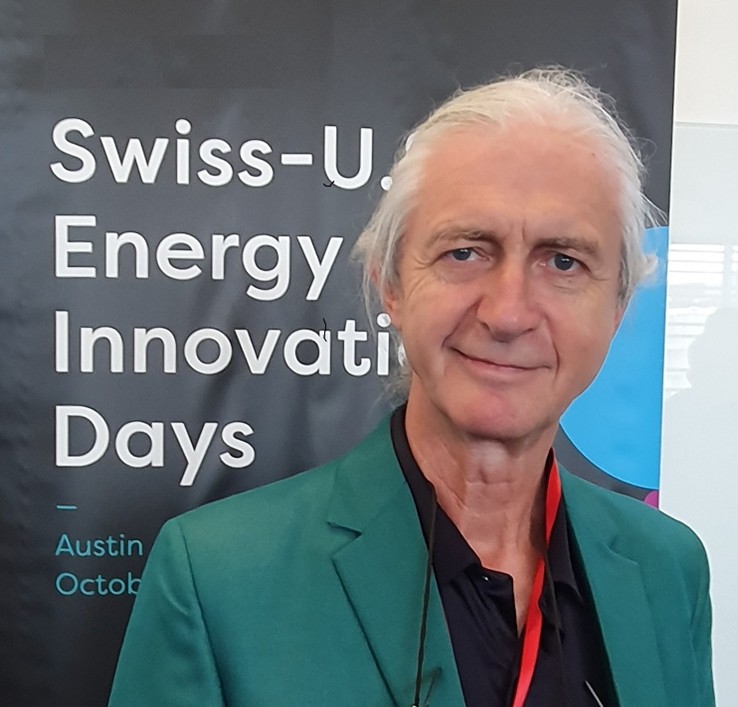
Jean-Bernard MICHEL
Dr Jean-Bernard MICHEL holds a Ph.D. in Energy technologies from the University of Valenciennes (France, 1983), he currently acts as Advisory Board Member for Race for Water Foundation , and as consultant and trainer, linkedin.com/in/jbmichel1
From 2004 to 2018 he was a Professor at the University of Applied Sciences and Arts Western Switzerland where he initiated and led several R&D projects in the field of energy and environment, particularly biomass and waste recovery. He is a trainer for Cenertec and has also worked as a consultant and trainer in Morocco, India and China on several occasions. He has gained extensive experience of energy processes and R&D at several internationally renowned laboratories in the Netherlands and Switzerland (IFRF, Battelle, CSEM).
He advises several companies on waste-to-energy recovery and new energy technologies and continues to train engineers and specialists in renewable energies, bioenergy and waste recycling.
He is also:
- Solar Impulse Expert for the World Alliance for Efficient Solutions
- Founder of the Swiss Association for Project Management and member of the Advisory Committee, project-management.ch
- IPMA Level B © Certified Project Manager (2001-2020)
ONLINE / LIVE
How does this Online/Live Training Work?
- Register on this page
- After registering and paying, Participants will receive an access link to click and enter the platform at the scheduled time.
- The training will be given in an Online/Live format, at the scheduled time, Live.
- This platform is very simple to use and allows for interactivity. Participants will be able to participate, comment, ask questions, clarify doubts, in writing or by voice, in real time.
This training, with a duration of 16 hours, will run on the following days:
3, 5, 10 and 12 November 2026
Timetable:
09:30 – 13:30 CET | Break: 11:30 – 12:00
08:30 – 12:30 GMT | Break: 10:30 – 11:00
The registration fee is 490.00 € + VAT (23%), a total value of 602.70 € payable to CENERTEC until the date of the Course and includes:
- Access to the E-Learning Platform
- Access to Supporting Documentation
- Certificate